
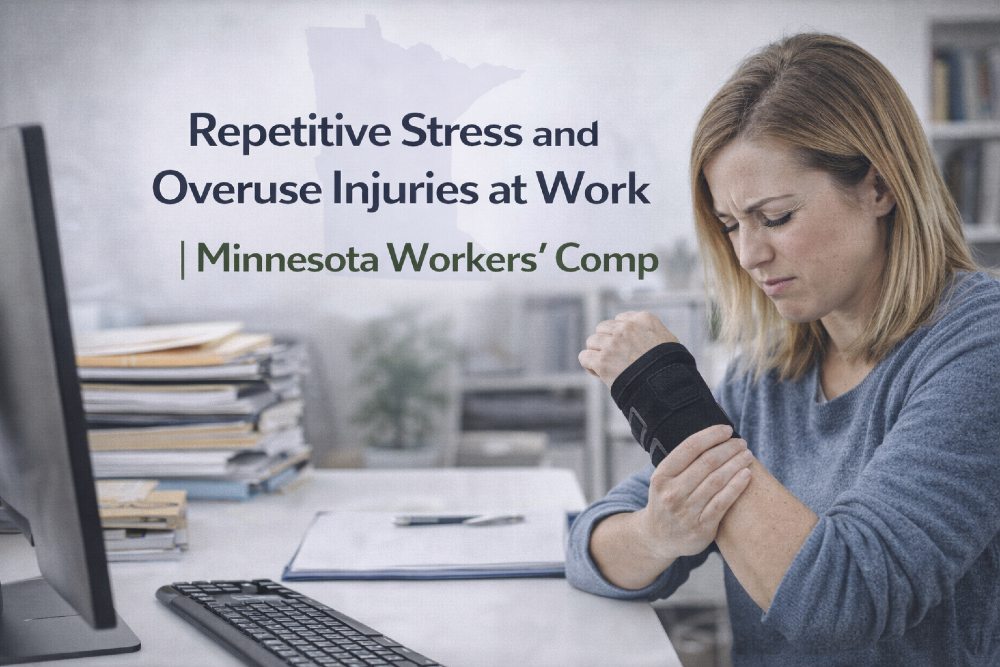
Repetitive Stress and Overuse Injuries at Work (MN Workers’ Comp)
Quick answer: Yes — repetitive stress and overuse injuries may be covered by Minnesota workers’ compensation if work activities are a substantial contributing factor to the condition. Not every work injury happens in a single accident; conditions like carpal tunnel syndrome, tendonitis, and chronic back pain often develop gradually from repeated motion or strain. Because there is no single “accident date,” these claims raise special questions about when the injury legally occurred and what caused it. Insurers frequently dispute them, so medical evidence linking the condition to job duties is especially important.
Many people assume workers’ compensation is only for sudden accidents — a fall, a crush injury, one bad moment. But a large share of real work injuries build up slowly, from doing the same demanding motions day after day. Minnesota law recognizes these gradual injuries, yet they are also among the most contested claims in the system precisely because they do not fit the “one accident” template.
This article explains how repetitive stress and overuse injuries are treated under Minnesota workers’ compensation law, why they are so often disputed, and what injured workers should understand.
Are Repetitive Stress Injuries Covered by Workers’ Compensation in Minnesota?
Yes. Repetitive stress and overuse injuries — sometimes called cumulative trauma injuries — may be covered by workers’ compensation in Minnesota if work activities are a substantial contributing factor to the condition. Coverage comes from the same no-fault framework in Minnesota Statutes Chapter 176, administered by the Minnesota Department of Labor and Industry (DLI).
The difference from a sudden accident is that these claims often turn on when the injury occurred and what caused it. Because the condition developed over time, both the date of injury and the connection to work can be contested — which is why documentation matters so much.
Minnesota workers’ compensation lawyer
What Are Common Types of Repetitive Stress and Overuse Injuries?
Repetitive stress injuries can affect many parts of the body, depending on job duties. Common examples include:
- Carpal tunnel syndrome and other nerve compression injuries
- Tendonitis in the wrists, elbows, or shoulders
- Rotator cuff and other shoulder injuries
- Elbow injuries (such as epicondylitis)
- Knee injuries from repeated kneeling or squatting
- Chronic back pain from repeated lifting, bending, or twisting
These conditions can be just as disabling as an acute injury, even though they arrive gradually rather than all at once.
Which Jobs See Repetitive Stress Injuries Most Often?
Many kinds of work involve repetitive tasks that can lead to overuse injuries. These injuries are commonly seen in manufacturing, construction, healthcare, warehouse work, office and computer-based jobs, food service, and retail. The common thread is repetition and sustained physical demand rather than any one industry.
Physically demanding trades can produce both sudden and gradual injuries. Construction is a good example — our page on construction work injuries and workers’ comp in Minnesota covers how those claims are handled when strain builds up over time.
Why Are Repetitive Stress Claims So Often Disputed?
Insurers frequently dispute repetitive stress claims precisely because the injury did not occur during a single, identifiable incident. Without a clear accident date, there is more room to argue about cause. Common insurer arguments include:
- The condition is age-related or degenerative rather than work-related
- It was caused by activities or hobbies outside of work
- It stems from a pre-existing condition
These arguments are part of a broader set of strategies used to limit claims, discussed in our page on insurance company tactics in workers’ comp claims. Causation disputes also arise in other contexts — for example, insurers may use a positive drug test to argue that a worker was impaired rather than injured by repetitive strain; our page on THC and drug testing in Minnesota workers’ compensation explains how that analysis works. Importantly, even a condition with non-work contributors may still be compensable if work was a substantial contributing factor.
Why Does Medical Evidence Matter So Much in These Claims?
Medical documentation is central to repetitive stress cases. Because the injury built up over time, a treating doctor often needs to explain how specific job duties contributed to the condition — connecting the physical demands of the work to the diagnosis.
Detailed work histories, accurate job descriptions, and consistent treatment records frequently become key evidence. The clearer the link between the repetitive activity and the medical condition, the stronger the claim tends to be.
When Does a Repetitive Stress Injury “Occur” for Workers’ Comp Purposes?
In cumulative trauma cases, pinning down the date of injury can be genuinely complicated. Minnesota workers’ compensation law uses specific rules to identify when a gradually developing injury is considered to have occurred — often tied to events like when the worker sought treatment, missed work, or knew the condition was work-related.
This determination is not just academic. The date of injury can affect reporting deadlines and eligibility, so how it is established may have real consequences for a claim.
What Benefits Are Available for Repetitive Stress Injuries?
Workers’ compensation benefits for repetitive stress injuries may include medical treatment, wage-loss benefits, permanent disability compensation, and vocational rehabilitation. Availability depends on the severity of the injury and the ability to continue working.
Because overuse injuries can sometimes make it difficult to continue in the same line of work, retraining and permanency benefits may be relevant. Our overview of workers’ compensation benefits in Minnesota explains each category, and if treatment disputes arise, our page on changing your doctor on workers’ comp may help.
When Should You Talk With a Workers’ Compensation Lawyer?
Legal guidance may be helpful in repetitive stress claims, especially when an insurer disputes causation, argues the condition is age-related or non-work-related, or denies benefits. An attorney can help gather medical evidence, clarify date-of-injury and reporting issues, and address disputes under Minnesota workers’ compensation law. Because these claims are so often contested, early advice can help protect the claim. Many workers’ compensation attorneys offer a free initial consultation.
Workers’ compensation lawyer in Minnesota
Frequently Asked Questions
Is carpal tunnel covered by workers’ comp in Minnesota?
It may be. Carpal tunnel syndrome and similar repetitive stress conditions can be covered if work activities were a substantial contributing factor. Because these injuries develop over time, medical evidence linking the condition to job duties is especially important.
How do I prove a repetitive stress injury is work-related?
Proof typically relies on medical evidence connecting your specific job duties to the condition, supported by a detailed work history, job description, and consistent treatment records. A treating doctor’s explanation of how the repetitive activity contributed to the injury is often central.
Can I get benefits if I also have a pre-existing or age-related condition?
Possibly. Insurers often argue that a condition is age-related or pre-existing, but benefits may still be available if work was a substantial contributing factor. The presence of other contributors does not automatically defeat a claim.
When does the deadline to report a repetitive injury start?
Because there is no single accident, Minnesota uses specific rules to set the date of injury for cumulative trauma — often tied to when treatment was sought, work was missed, or the worker knew the condition was work-related. That date can affect reporting deadlines, so confirming it matters.
What if my job caused the injury but I didn’t notice it right away?
Gradual injuries by nature often go unnoticed until symptoms become significant. That does not necessarily bar a claim, but it makes the date-of-injury analysis and prompt reporting once you become aware of the problem important. Documenting when symptoms began and when you connected them to work can help.
Get Help With a Repetitive Stress Injury Claim
If work-related activities have caused a repetitive stress or overuse injury, speaking with a lawyer may help clarify your rights and available benefits. Request a free consultation.
Disclaimer: This article is intended for general informational and educational purposes only and does not constitute legal advice. Every workers’ compensation matter is fact-specific, and outcomes depend on medical evidence, employment circumstances, and applicable Minnesota law. Reading this article, or contacting the firm, does not create an attorney-client relationship. If you have questions about your own situation, please consult a licensed Minnesota attorney.
Carpal tunnel syndrome is one of the most common repetitive stress conditions seen in Minnesota workers’ comp claims. Learn more in our related article: Carpal Tunnel and Workers’ Comp in Minnesota.